Reference: WORKER PATCH-GITANE
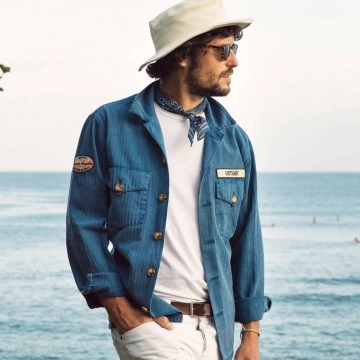
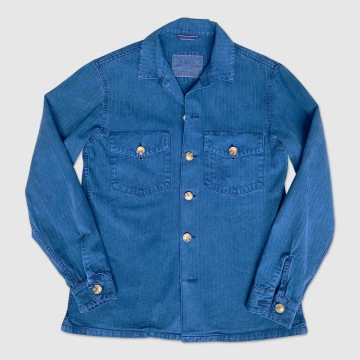
Born from a collaboration with Maison Bonnet, this WORKER jacket reimagines traditional French workwear in an exceptional patchwork of cottons. HBT herringbone, ripstop, and canvas are assembled in our workshops, then dyed and washed to achieve this weathered gypsy blue. Six months of development and only 50 numbered pieces.
Data sheet
Specific References
Born from a collaboration with Maison Bonnet, this WORKER jacket reimagines traditional French workwear in an exceptional patchwork of cottons. HBT herringbone, ripstop, and canvas are assembled in our workshops, then dyed and washed to achieve this weathered gypsy blue. Six months of development and only 50 numbered pieces.
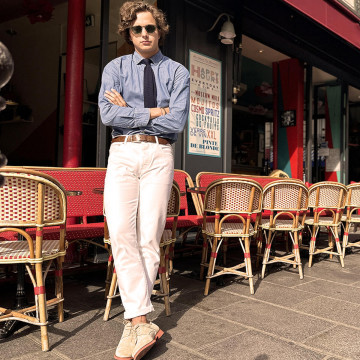
The white red-selvedge jeans in Japanese raw canvas, 14oz.
In the inspiration of the Levi's 501, its cut is straight and its intermediate size (neither high nor low).
This model is one of our best-sellers, so we have available it in white, jeans in this color are particularly trendy this season.
Made in Portugal.
Oxford blue long-sleeved shirt, 100% cotton.
Its "one-piece collar" is longer and flared to fit directly into the lapel of the vest.
It requires a very special tailoring and mastery that gives it a rolled and impeccable fall.
It is a very trendy specificity at the moment.
Italian manufacturing
This vest has been crafted from a rare and exceptional Japanese fabric. It is a stretch cotton with a camouflage pattern, featuring a vintage, timeworn finish.
Its tones are timeless and pair effortlessly with any color.
Limited and numbered edition of only 50 pieces.
Handcrafted in our workshop.
Silk scarf, featuring a unique and exclusive design representing the map of Biarritz, the Basque Coast city that inspires each of our collections.
It ties like a tie: loose for a casual style, closer to the neck for a refined look.
This accessory speaks volumes about the character and elegance of the man you are.
Dimensions: 65x65cm
This overshirt is crafted from khaki Shetland wool.
The heathered yarns used in its construction give it a unique, deep color with subtle nuances.
It features two chest flap pockets, two side pockets in a jacket style, and an interior pocket.
Also available in beige, red and brown.
Handmade in our workshop.
This denim shirt was inspired by the shirts of the conquest of the West: a subtle blend of traditional Mexican shirts and colonial combat shirts.
It's modern and summery thanks to its faded denim fabric.
Also available in khaki, off-white, stone denim, raw denim and brown suede.
Brown suede overshirt with a western look, taking inspiration from the “American Wild West style”.
It has two chest pockets, pearl snap buttons and a buttonhole on the sleeves.
It is original, elegant and comfortable at the same time.
Also available in khaki, off-white, raw denim, bleach denim, stone denim.
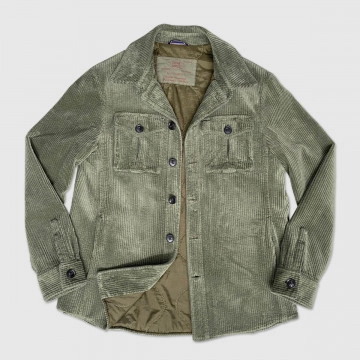
Halfway between a jacket and a vest, our Wood overshirt is our best-seller this winter. Usually made of wool, this time we decided to make it in khaki corduroy.
Its inner lining is quilted.
Unique and very limited edition.
Handmade in our own workshop in Portugal.
Also available in caramel and blue sky.
Easy to care for
Halfway between an overshirt and a jacket, our WOOD pairs a 100% wool bold herringbone pattern in caramel and chocolate tones with a quilted microfiber lining. Warm, comfortable, and breathable, it is handcrafted in our own workshop, combining the precision of a tailored jacket with the casual ease of a bomber.
Halfway between a jacket and a coat, our Wood overshirt is one of our winter best-sellers.
Usually made in wool, we have chosen this time to reinterpret it in a caramel corduroy fabric.
Its interior lining is quilted.
Handcrafted in our own workshop in Portugal. Easy to care for.
Jacket made from a caramel-colored cotton and linen fabric.
It features two large side flap pockets and a chest pocket.
Unlined, its finishes are impeccable.
Two back vents guarantee true ease and incomparable comfort.
Handmade in our workshop in Lisbon.
Also available in beige.
The West Shirt is a military-inspired jacket. It was inspired by the replica of a field jacket worn by the French army during the Indochina War.
Its cut is fitted, between the fit of a blazer and an overshirt.
It was made from thick cotton with a herringbone weave.
Made in our workshop in Portugal.
Quilted overshirt ideal for all occasions. It is made of nylon and has a comfortable slim fit, a quilted grid highlighted by intense colors and press studs.
This jacket is filled with exceptional down to always keep you warm in this season.
A unique and chic style.
Available in several colors.
A Field Jacket inspired by Canadian field jackets, redesigned for urban wear. Crafted from lightweight, water-repellent, and windproof English canvas, it features large pockets and the ideal length to wear over a blazer or our RESCUE vest. A functional piece turned staple.
This shirt was inspired by the shirts of the conquest of the West: a subtle blend of traditional Mexican shirts and colonial combat shirts.
It's modern and summery thanks to its ecru cotton and linen fabric.
Made in Portugal.
Also available in raw denim, stone denim, bleached denim, brown suede and khaki.
Ultra-thin navy parka combining technical performance and elegance.
Crafted from a lightweight Italian fabric with a cotton-like feel, water-repellent and breathable.
Highly practical, it folds into its integrated inner pocket for easy carrying.
A true windbreaker, designed for mid-season wear.
Handmade in our workshop in Portugal.
Also available in khaki.
Navy cotton flannel shirt with checks, with a western spirit.
Its brushed cotton keeps you warm and is very comfortable to wear.
It has 2 chest pockets, mother-of-pearl snap buttons.
It can be worn as a shirt or an overshirt.
Very limited quantity
European manufacturing
Halfway between a blazer and a safari jacket, our HABANO jacket combines elegance and casual style. Crafted from stretch cotton moleskin, garment-dyed then stone-washed, it offers exceptional softness, great durability, and that subtly vintage look that gives it all its character.
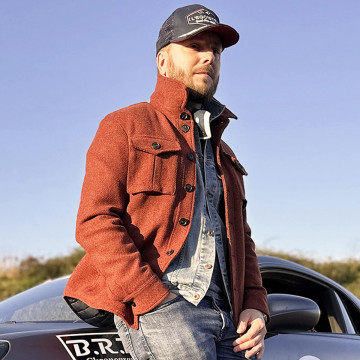
This overshirt is in brick red Shetland wool, with a basket weave.
It has two bellows pockets on the chest, two side pockets (jacket style) and an interior pocket.
Its interior lining is a navy blue quilted nylon fabric.
Also available in beige or houndstooth pattern.
Made in our own workshop in Lisbon.